Picture this: It is a crisp, beautiful autumn afternoon in late October. The leaves are a brilliant tapestry of gold and crimson, and you have just returned from an invigorating walk in the fresh air with your beloved fur baby. Your pup is panting happily, tail wagging at supersonic speeds, utterly satisfied with their outdoor adventure. But as you open the front door, your heart sinks. Your happy and healthy pup is sporting four boots of thick, wet, dark brown mud, ready to be stamped all over your pristine hardwood floors and cream-colored carpets.
As dog parents, we have all faced this exact moment of dread. The rainy seasons of autumn and winter bring endless joy to our water-loving dogs, but they also bring an absolute nightmare for our home’s cleanliness. Fortunately, you do not have to choose between your dog’s happiness and a clean house. With the right strategies, you can transition your pup from the muddy outdoors to your cozy living room seamlessly. In this comprehensive guide, we are sharing the ultimate muddy paw cleaning hacks for dogs that will save your sanity, protect your floors, and keep your dog’s paws healthy and comfortable all year round.
Whether you are dealing with a tiny, energetic Pomeranian or a massive, mud-loving Labrador Retriever, these certified trainer-approved hacks are designed to make clean-up time a stress-free bonding experience. Grab a warm cup of cider, snuggle up with your canine companion, and let’s dive into these game-changing, tail-wagging approved techniques!
Why Keeping Paws Clean is More Than Just an Aesthetic Issue
While preventing muddy paw prints on your sofa is a major motivator, implementing these muddy paw cleaning hacks for dogs isn’t just about maintaining a beautiful home. It is actually a fundamental aspect of your dog’s health and wellness. A dog’s paw pads are incredibly sensitive, complex structures. They contain sweat glands, blood vessels, and specialized skin designed to absorb shock and provide traction. When mud accumulates between their toes and paw pads, it creates a warm, damp environment that is the perfect breeding ground for yeast and bacterial infections.
Furthermore, mud is rarely just soil and water. Depending on where you walk, mud can hide a variety of hidden hazards. In suburban areas, lawns are frequently treated with chemical fertilizers, pesticides, and herbicides. In urban environments, puddles often contain toxic automotive fluids like antifreeze (which has a sweet taste that dogs find appealing but is highly lethal even in tiny amounts). As we move into late November and December, sidewalks are often coated in harsh road salts and chemical ice melts, which can cause painful chemical burns on your pup’s sensitive pads.
When your dog licks their dirty paws to clean themselves, they ingest these toxic chemicals, parasites (such as hookworm larvae or giardia cysts found in contaminated soil), and bacteria. By establishing a robust paw-cleaning routine, you are actively protecting your dog from gastrointestinal distress, chemical poisoning, and painful skin conditions like pododermatitis. Taking care of your pup’s health is always a smart financial decision too. If you are looking for more ways to manage your household expenses while ensuring your family and pets live their best lives, check out our Realistic Grocery Budget for Family of Four: Ultimate Savings Guide to optimize your monthly spending.
7 Genius Muddy Paw Cleaning Hacks for Dogs
Keeping your dog’s paws clean doesn’t have to feel like a wrestling match. Let’s dive into our favorite muddy paw cleaning hacks for dogs that will transform your post-walk routine from chaotic to calm.
1. The “Double-Doormat” Microfiber Trap
Prevention is the best medicine, and this hack starts before your dog even crosses the threshold. Most standard doormats are designed for human shoes, not the furry, high-surface-area paws of a dog. To create an effective mud trap, implement the double-doormat system. Place an outdoor heavy-duty scraper mat outside your door to catch the thickest chunks of mud. Just inside the door, place a high-pile, ultra-absorbent microfiber chenille dog mat. These specialized mats act like giant sponges, absorbing up to seven times their weight in water and trapping dirt deep within their fibers as your dog steps on them. Simply training your dog to “wait” on this indoor mat for 30 seconds can reduce the amount of moisture and mud tracked into your home by up to 70%.
2. The Portable Silicone Paw Cleaner (The “MudBuster” Trick)
If you haven’t discovered the magic of a portable silicone paw cleaning cup, prepare to have your life changed. These clever devices, like the Dexas MudBuster, are tall plastic cups lined with soft, flexible silicone bristles. You fill the cup with a little bit of warm water, gently insert your dog’s muddy paw, and twist the cup. The silicone bristles gently scrub away mud, sand, and debris from between the paw pads without causing any discomfort. Keep a dry microfiber towel next to your cleaning station to pat the paw dry afterward. It is quick, highly effective, and prevents you from having to carry a muddy dog all the way to the bathroom tub.
3. DIY No-Rinse Paw Cleaning Spray
For days when the mud is light but the paws are still dirty, a DIY no-rinse paw spray is a lifesaver. You can easily make this at home using pet-safe, natural ingredients. Mix one cup of distilled water, half a cup of organic, unsweetened chamomile tea (which has natural soothing and anti-inflammatory properties), and one tablespoon of organic apple cider vinegar (which acts as a natural antibacterial and antifungal agent). Pour the mixture into a clean spray bottle. Spray a generous amount onto a soft microfiber cloth and wipe down your dog’s paws. Safety Warning: Never add essential oils like tea tree, eucalyptus, or wintergreen to your DIY sprays. While they are popular in human cosmetics, these oils are highly toxic to dogs if licked and ingested.
4. The Warm Water “Dunk Bucket” Station
For those living in areas with clay-heavy soil that dries like concrete onto your dog’s fur, a simple wipe-down won’t cut it. Set up a “dunk bucket” station right by your entryway before you leave for your walk. Fill a small utility bucket with warm water and place a thick towel next to it. When you return, gently lift each of your dog’s paws and submerge them directly into the warm water for 5 to 10 seconds. The warm water rapidly dissolves stubborn, dried-on mud and clay. Swish the paw gently, lift it out, and wrap it immediately in the dry towel to squeeze out the excess moisture. This is incredibly soothing for your dog, especially on chilly autumn and winter days.
5. Apply a Protective Paw Wax Barrier
One of the best ways to clean muddy paws easily is to prevent the mud from sticking in the first place. Applying a high-quality paw protection wax, such as Musher’s Secret, acts as an invisible, breathable barrier on your dog’s paw pads. Developed originally for sled dogs in Canada, this non-toxic wax prevents mud, ice, and salt from adhering to the skin and getting packed into the delicate crevices between their toes. It also deeply moisturizes dry, cracked pads. Apply a thin layer to your dog’s pads right before your walk; when you return, you will find that any mud wipes off with absolute ease using a simple dry cloth.
6. The Undercoat and Paw Trim (The “Slipper” Groom)
Long-haired breeds like Golden Retrievers, Cocker Spaniels, and Poodles often grow long tufts of fur between their toes, affectionately known as “grinch feet.” This extra hair acts like a magnet for mud, burrs, and ice balls. One of the most effective muddy paw cleaning hacks for dogs is to keep this hair neatly trimmed. Using a quiet, pet-safe grooming clipper or round-nosed safety shears, carefully trim the hair flush with their paw pads. Keeping this area clear of excess fur significantly reduces the amount of mud that can cling to their feet, making your post-walk cleaning routine infinitely faster.
7. The “Paw Wipe” Positive Reinforcement Game
Many dogs absolutely hate having their paws touched, let alone wiped. This often turns paw cleaning into a stressful tug-of-war. To solve this, turn paw wiping into a fun, rewarding game using positive reinforcement. Start by placing a damp towel on the floor. Encourage your dog to step on it voluntarily, and immediately reward them with a high-value treat (like a tiny smear of dog-safe, xylitol-free peanut butter or a piece of freeze-dried beef liver). Gradually progress to gently touching their paw with the towel, rewarding them for remaining calm. By pairing paw handling with delicious treats, your pup will soon associate the cleaning process with wonderful things, making them a cooperative, eager participant in their grooming routine.
Common Muddy Paw Cleaning Mistakes to Avoid
While trying to keep your home clean, it is easy to fall into habits that might actually harm your fur baby. Here are three common mistakes that every dog owner should avoid:
- Using Human Baby Wipes or Wet Wipes: Human skin has a significantly different pH level (around 5.5, which is acidic) compared to a dog’s skin (which is neutral to alkaline, around 7.0 to 7.5). Using human baby wipes, even “sensitive” ones, can disrupt your dog’s natural skin barrier, leading to dryness, irritation, and increased susceptibility to infections. Always choose wipes specifically formulated for dogs.
- Leaving the Paws Damp: Wiping your dog’s paws with wet towels or rinsing them off is great, but leaving them damp is a major mistake. Moisture trapped in the warm spaces between the toes is the number one cause of yeast overgrowth (which causes that distinct “Fritos” corn chip smell and leads to obsessive paw licking). Always follow up any wet cleaning method with a thorough drying using a dry, absorbent microfiber towel.
- Forcing the Issue with a Stressed Dog: If your dog growls, pulls away, or shows signs of anxiety during paw cleaning, do not force them. Forcing the process can lead to fear-based aggression and make paw handling impossible. Take a step back, use plenty of high-value treats, and build up their comfort level slowly over several days.
The Ultimate Step-by-Step Muddy Paw Routine
To make your life as simple as possible, here is a highly efficient, 4-step entryway routine you can implement today to keep the mud exactly where it belongs: outside!
- Prep Your Station: Before you even step foot outside for your walk, set up your entryway. Lay down your microfiber mat, place your portable paw cleaner (filled with warm water) or your DIY spray nearby, and have a dry microfiber towel ready to go.
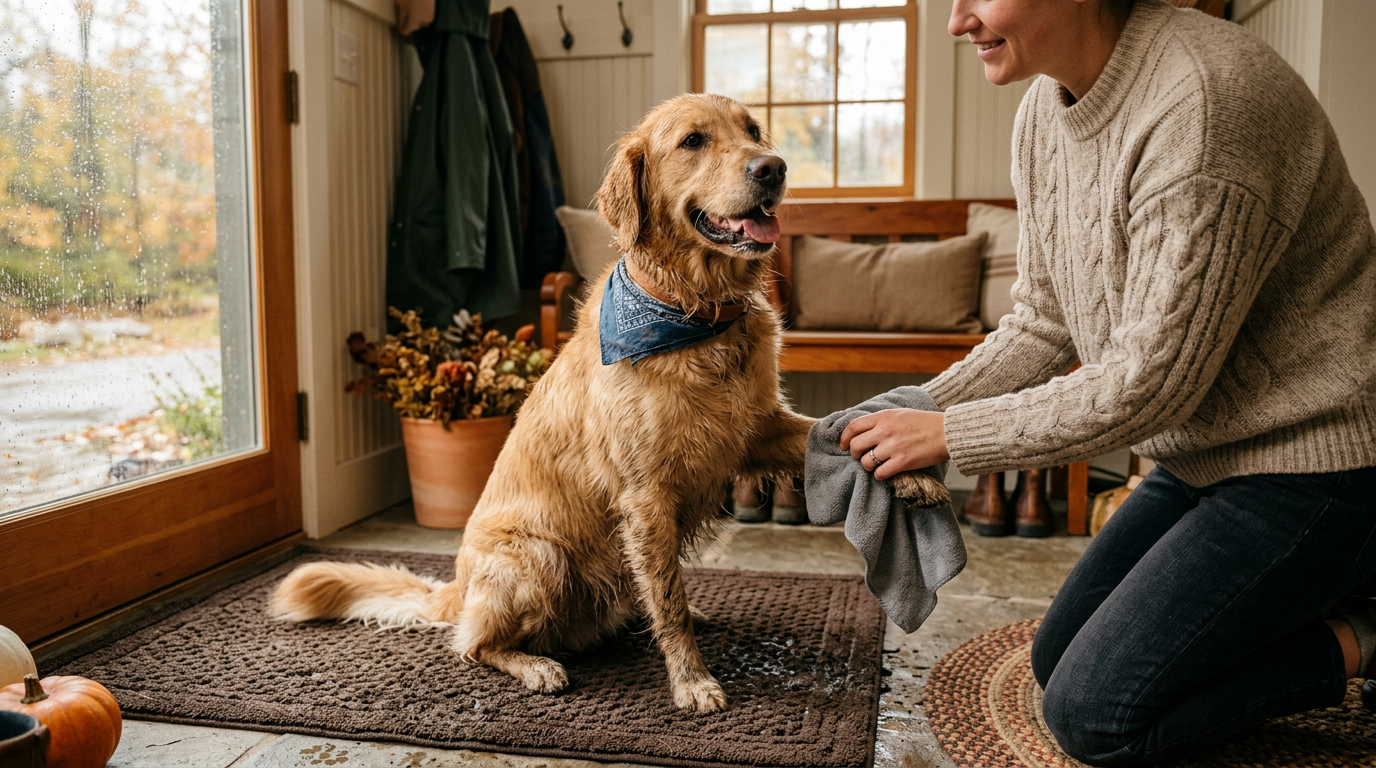
- The Threshold Wait: When you return, have your dog step directly onto the microfiber mat. Ask them to “sit” or “wait.” This initial pause allows the mat to absorb the bulk of the surface moisture from their belly and paws.
- The Clean and Dry: Use your portable paw cleaner or DIY spray on one paw at a time. Clean gently, then immediately wrap the paw in your microfiber towel. Squeeze gently to absorb all moisture, making sure to get between the toes. Repeat for all four paws.
- The Reward: Once all four paws are clean and dry, give your pup a delicious, tail-wagging approved treat and praise them warmly. This reinforces their good behavior and ensures they look forward to the routine next time.
Must-Have Muddy Paw Gear: Honest Reviews
To help you choose the best tools for your home, here is an honest review of the top products on the market designed to tackle dirty paws:
Dexas MudBuster Portable Dog Paw Cleaner
Pros: Incredibly effective at removing deep-seated mud, sand, and grit. The soft silicone bristles are highly durable and gentle on sensitive paws. It is easy to disassemble and is dishwasher safe (top rack). Excellent for active dogs who love hiking.
Cons: Requires you to carry water with you if you want to use it at the trailhead before your dog gets into the car. If your dog has extremely large paws, you must ensure you buy the correct size (comes in S, M, and L).
Musher’s Secret Paw Protection Wax
Pros: Made from 100% natural, food-grade waxes, making it completely safe if your dog licks it. Provides outstanding protection against mud, hot pavement, ice, and salt. Extremely long-lasting; a single tub can last for several seasons.
Cons: Can leave temporary greasy paw prints on hardwood floors if applied too thickly right before they walk inside. It is best applied right before stepping out the door.
Soggy Doggy Doormat (Microfiber Chenille)
Pros: Unbelievably absorbent and traps dirt like a magnet. It is machine washable and dryable, maintaining its softness and absorbing power even after dozens of washes. It feels incredibly soft, and most dogs love lying on it.
Cons: It is more expensive than standard doormats, costing around $40 to $50 depending on the size. However, the durability and performance make it well worth the investment.
Conclusion: Embrace the Mud and Enjoy the Journey!
At the end of the day, a muddy dog is a happy dog. Splashing in puddles, digging in the autumn leaves, and exploring the damp earth are natural, enriching behaviors that help your dog live their very best life. By integrating these clever muddy paw cleaning hacks for dogs into your daily routine, you no longer have to dread the rainy weather or restrict your pup’s outdoor fun. You can enjoy those wet, soggy walks to the fullest, knowing that a quick, stress-free, and highly effective cleanup routine awaits you at home.
Remember, consistency and positive reinforcement are key. Be patient with your fur baby as they adapt to these new routines, and always keep the experience positive and rewarding. Do you have a favorite paw-cleaning trick that we missed? We would love to hear from you! Leave a comment below sharing your go-to tips, and don’t forget to share this guide with your fellow dog parents to help them keep their homes clean and their pups happy this muddy season!