Embracing a Timeless, Cozy Space for Your Little One
Preparing for a new baby is one of the most exciting times in a parent’s life, but it can also feel incredibly overwhelming. With endless design trends filling your social media feeds, finding a style that feels both calming and enduring is a top priority. If you find yourself drawn to the charm of simple living, rustic warmth, and natural beauty, embracing the cottagecore baby room decor aesthetic is a beautiful way to welcome your little one home. This design style blends vintage nostalgia with cozy, nature-inspired elements, creating a peaceful sanctuary where you and your baby can bond, rest, and grow together.
As a new parent, you want a space that is not only beautiful but also highly functional and, above all, safe. The beauty of cottagecore design is that it naturally lends itself to a warm, comforting environment without requiring cold, clinical modernism. By focusing on organic textures, warm earth tones, and thoughtful layouts, you can craft a room that feels like a gentle hug. In this comprehensive guide, we will walk you through everything you need to know to bring this safe and stylish look to life, from safety guidelines to parent-approved registry must-haves.
What is the Cottagecore Baby Room Decor Aesthetic?
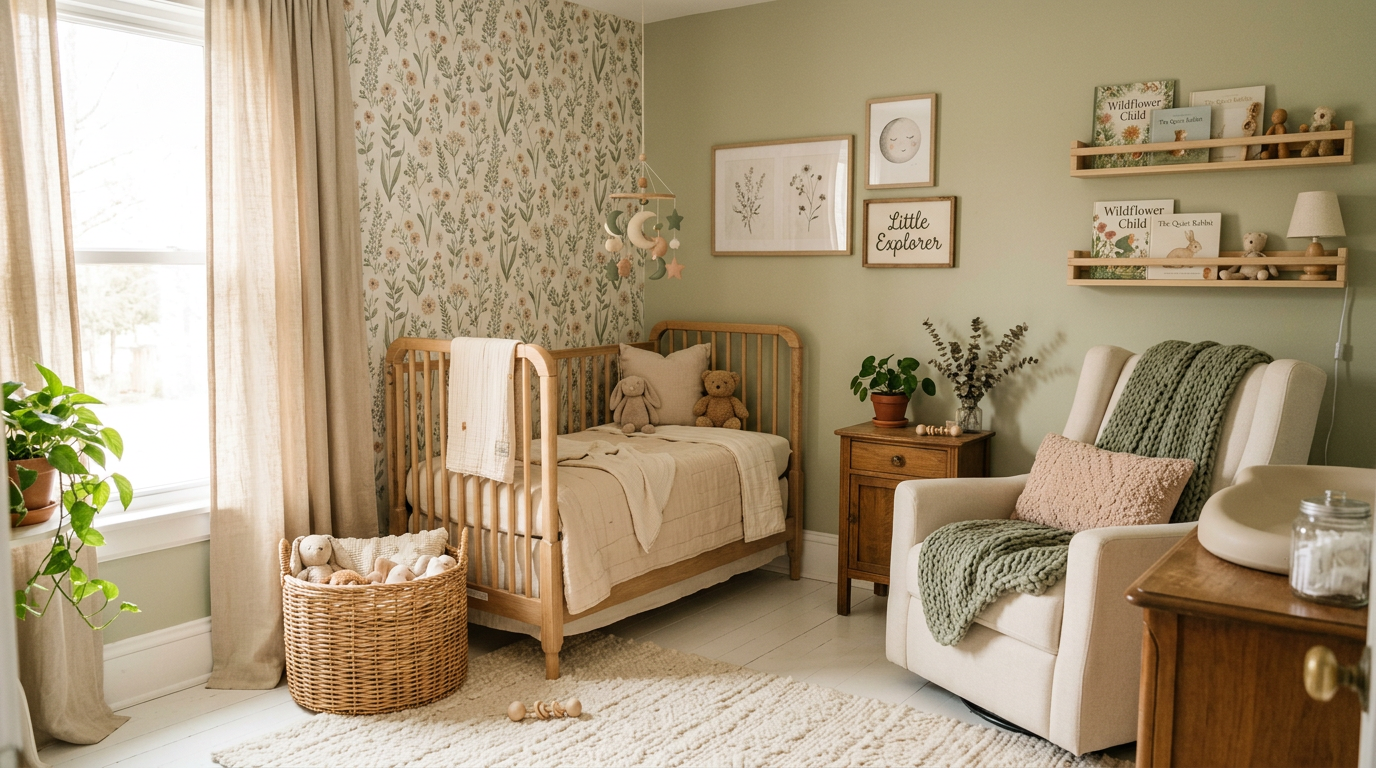
At its heart, this style is inspired by a romanticized interpretation of agricultural life, vintage charm, and the natural world. When applied to nursery design, it translates into a space filled with botanical prints, whimsical woodland creatures, soft textiles, and warm wood tones. Instead of the stark, bright whites of minimalist design, this style relies on rich, comforting cream tones, muted sage greens, dusty roses, and warm ochres to create depth and character.
Achieving a timeless cottagecore baby room decor aesthetic is all about layering textures. Think of a solid wood spindle crib, a plush organic cotton rug, soft linen drapery, and woven willow baskets for toy storage. It is a look that feels curated over time rather than purchased all at once from a big-box store display. This curated feel makes it incredibly versatile, allowing you to incorporate family heirlooms, thrifted treasures, and modern safety-certified furniture seamlessly.
Beyond its visual appeal, this design approach has practical benefits for your baby’s development. The soft, muted color palettes and natural materials create a low-stimulation environment that promotes better sleep and relaxation for both baby and parents. In a world full of glowing screens and plastic toys, this style offers a gentle return to nature and simplicity right inside your home.
Practical Design Tips for a Cozy, Safe Nursery
Designing a nursery requires balancing beauty with everyday practicality. When you are awake at 3:00 AM for a feeding, you will care much more about the comfort of your glider and the accessibility of diapers than the perfect placement of a vintage painting. Here are four essential design tips to ensure your cottagecore space is as functional as it is charming.
1. Choose a Soothing, Natural Color Palette
Start your design journey with a base of neutral earth tones. Instead of stark white, opt for warm creams, soft beiges, or gentle taupes for the walls. These tones bounce light beautifully during the day and feel incredibly cozy under warm lighting at night. To bring in the cottagecore vibe, introduce accent colors through wallpaper, paint, or textiles. Muted sage green, dusty terracotta, soft butter yellow, and faded lavender are excellent choices that feel whimsical yet grounded. These colors also have incredible longevity, easily transitioning from a baby nursery to a toddler room and beyond.
2. Optimize Your Layout for Small Spaces
If you are working with a smaller room, layout is everything. Keep the center of the room open to make the space feel larger and to give yourself room for tummy time. Place the crib against a solid wall, ensuring it is far away from windows, drafty areas, and heating vents. Position your glider or rocking chair in a cozy corner, ideally next to a small side table where you can place a bottle, a book, or a warm cup of tea. Utilize vertical space by installing floating wooden shelves to display vintage storybooks and small toys safely out of baby’s reach.
3. Prioritize Safe and Stylish Crib Setups
The crib is the focal point of any nursery, but it must be the safest spot in the house. To adhere to the Consumer Product Safety Commission (CPSC) guidelines, your baby’s crib must be entirely bare. This means no bumpers, no pillows, no blankets, and no stuffed animals—just a firm, tight-fitting mattress and a fitted sheet. You can still achieve a gorgeous cottagecore look by selecting a beautifully crafted wood or metal spindle crib and pairing it with a high-quality organic cotton fitted sheet featuring a delicate floral, gingham, or woodland print.
4. Layer Light with Blackout Solutions
While natural light is beautiful, baby sleep schedules demand darkness. To protect your baby’s sleep quality, invest in high-quality blackout curtains. Because thick, rubbery blackout drapes don’t always fit the airy cottagecore look, we recommend a layering approach. Install a high-quality, cordless blackout roller shade directly inside the window frame. Then, hang soft, romantic linen or cotton curtains on a wooden or brass rod outside the frame. This gives you the perfect combination of daytime beauty and nighttime darkness, helping your baby sleep longer and deeper.
Common Cottagecore Nursery Design Mistakes to Avoid
When trying to capture a vintage, rustic feel, it is easy to make a few common design missteps that can compromise safety or usability. Here are three major mistakes to watch out for as you design your space:
- Using Unsafe Antique Furniture: It can be tempting to use a family heirloom crib or a vintage painted dresser. However, older cribs often do not meet modern safety standards regarding slat spacing (which should be no more than 2 3/8 inches apart) and may contain toxic lead paint. Always buy a new, CPSC-approved crib. If you use a vintage dresser, sand it down to remove old paint, repaint it with non-toxic, zero-VOC paint, and securely anchor it to the wall to prevent tip-overs.
- Over-Cluttering with Dust Collectors: The cottagecore style loves knick-knacks, dried flowers, and vintage trinkets. In a baby’s room, however, these items quickly accumulate dust, which can irritate your baby’s sensitive respiratory system. Keep decorative objects to a minimum, ensure they are placed on high shelves securely out of reach, and avoid hanging heavy frames or shelves directly over the crib.
- Choosing Delicate, Non-Washable Fabrics: Silk, delicate lace, and dry-clean-only fabrics have no place in a nursery. Between spit-up, diaper blowouts, and spilled milk, everything in your nursery will need to be washed. Opt for durable, machine-washable fabrics like organic cotton, linen, and bamboo. Look for glider chairs with performance fabrics or washable slipcovers so you can clean up messes without stress.
Your Step-by-Step Guide to Creating the Look
Ready to start decorating? Follow this simple, stress-free action plan to bring your cottagecore baby room decor aesthetic to life before your little one arrives:
- Step 1: Define Your Sub-Theme and Palette (Month 5-6 of pregnancy): Decide if you want to lean toward a woodland forest, botanical garden, or rustic farmhouse vibe. Choose 3-4 primary colors and order paint samples or wallpaper swatches.
- Step 2: Select Your Anchor Furniture (Month 6): Purchase your crib, dresser, and glider. Look for GREENGUARD Gold certified pieces, which are tested for over 10,000 chemicals and VOCs, ensuring cleaner indoor air for your baby.
- Step 3: Prep and Paint the Room (Month 7): Paint the walls or install prepasted, removable wallpaper. Ensure the room is well-ventilated during this process, and let the room air out for a few days before bringing in furniture.
- Step 4: Assemble and Arrange (Month 7-8): Put together the crib and dresser. Position them according to your layout plan. Install wall anchors on all heavy furniture—this is a critical safety step you should never skip.
- Step 5: Add Textiles and Window Treatments (Month 8): Hang your blackout shades and curtains. Wash all crib sheets, swaddles, and rug covers in baby-safe, fragrance-free detergent, and set up your changing station.
- Step 6: Style the Final Details (Month 9): Hang safe, lightweight art pieces, organize the closet, and set up your nursing station with a dimmable nightlight, nursing pads, and burp cloths. Take a step back, relax, and enjoy the beautiful space you’ve created!
Cottagecore Nursery Registry Essentials: Must-Haves vs. Nice-to-Haves
When building your baby registry, it is easy to get carried away. To help you budget and plan, we have broken down our favorite parent-approved cottagecore registry items into essential must-haves and delightful nice-to-haves.
The Must-Haves (Budget: $300 – $800 total)
- Vintage-Style Spindle Crib ($250 – $450): Look for modern reproductions of classic Jenny Lind style cribs. They offer the perfect vintage look while meeting all modern CPSC safety standards. Brands like DaVinci or Million Dollar Baby offer beautiful, safe options.
- Organic Cotton Fitted Crib Sheets ($20 – $40 each): Register for 3-4 soft, breathable fitted sheets in botanical or gingham prints. Having extras on hand is essential for middle-of-the-night bed changes.
- Dimmable Warm Nightlight ($20 – $50): A soft, warm light is crucial for nighttime feedings and diaper changes. Look for a dimmable LED light that allows you to keep the room low-stimulation.
- Anti-Tip Wall Anchor Kits ($10 – $15): An absolute safety essential for anchoring dressers and bookshelves to the wall studs.
The Nice-to-Haves (Budget: $50 – $200 each)
- Woven Seagrass Changing Basket ($50 – $80): A beautiful, rustic alternative to plastic changing pads. Always use it on a flat, secure surface and never leave your baby unattended.
- Whimsical Woodland Mobile ($30 – $60): A felt or wooden mobile featuring forest animals or mushrooms adds a lovely touch of magic above the crib. Ensure it is hung high enough that your baby cannot reach it, and remove it once your baby can push up on their hands and knees.
- Vintage Storybook Wall Art ($20 – $50): Framed prints of classic illustrations from Peter Rabbit or Winnie the Pooh add instant nostalgia and warmth to the walls.
A Safe, Serene Haven for Growing Families
Creating a beautiful nursery is a wonderful way to prepare mentally and emotionally for the arrival of your little one. By focusing on the cottagecore baby room decor aesthetic, you are choosing a style that celebrates warmth, comfort, and the beauty of nature. Every time you sit in your glider rocking your baby to sleep, you will be surrounded by a calming environment designed with love, safety, and longevity in mind.
Remember, you do not need a perfect, magazine-ready room on day one. The most important elements of any nursery are the love you bring into it and the safety measures you put in place to protect your child. Trust your instincts, take your time sourcing pieces that bring you joy, and enjoy this special season of nesting. You have everything you need to create a safe and stylish home for your growing family.