Embracing the Healing Power of Sound in Your Own Sanctuary
As the days grow shorter and the crisp autumn air transitions into the quiet chill of winter, our bodies naturally crave warmth, stillness, and comfort. If you are juggling a busy career, family responsibilities, or the social whirlwind of the upcoming holiday season, finding a moment of true peace can feel like an elusive dream. You might find yourself lying in bed with a racing mind, wondering how to quiet the noise of daily demands. If this resonates, we want to offer you a gentle reminder: you deserve this time to recharge and reset. You do not have to constanty push through exhaustion to prove your worth. Sometimes, the most productive thing you can do is surrender to stillness.
We invite you to explore a deeply restorative practice that has been gaining popularity for its profound ability to soothe the nervous system: sound bath meditation at home. While visiting a professional sound healing studio is a beautiful experience, creating your own home-based sanctuary allows you to customize your healing journey to your exact needs. Whether you have five minutes or an hour, integrating therapeutic sound waves into your daily life can help you release stored tension, quiet your mind, and restore a sense of inner harmony.
In this comprehensive guide, we will walk you through the science, the tools, and the practical steps to establish a nourishing sound bath practice in the comfort of your own living room. No prior experience is required—just an open heart and a willingness to honor your needs. Let us dive into the gentle, restorative world of home sound healing.
The Science and Magic: What is Sound Bath Meditation at Home?
To understand the benefits of practicing sound bath meditation at home, it helps to look at how sound waves interact with our biology. At its core, a sound bath is an immersive acoustic experience where you are “bathed” in the healing vibrations of instruments like crystal singing bowls, Tibetan brass bowls, gongs, chimes, and ocean drums. Unlike active music listening, where your brain analyzes lyrics or catchy melodies, sound therapy utilizes sustained, organic tones that encourage your brainwaves to slow down.
Our brains naturally operate in different states of frequency throughout the day. When we are busy, working, or feeling stressed, we are in a high-frequency Beta brainwave state. Sound healing helps transition the brain into Alpha waves (associated with relaxed focus and light meditation) and even Theta waves (the state of deep meditation, dreaming, and cellular healing). This transition activates your parasympathetic nervous system—often called the “rest and digest” response—which lowers your heart rate, reduces cortisol levels, and supports physical recovery.
By practicing a restorative sound bath at home, you create a safe, predictable environment where your body can finally let its guard down. It is a beautiful, evidence-based way to ease anxiety, improve sleep quality, and foster emotional release. There is no right or wrong way to feel during a session; some days you may feel a sense of profound joy, while other days you might shed a few quiet tears of release. Every experience is a valid step on your personal wellness journey.
Creating Your Sacred Space: Integrating Sound into Your Routines
To make the most of your sound bath meditation at home, the environment you create is just as important as the sounds you choose. This is your opportunity to practice the art of nesting, turning a simple corner of your home into a cozy sanctuary of healing. Here is how you can weave sound healing into your daily and weekly self-care practices.
A Cozy Morning Routine to Ground Your Energy
Instead of reaching for your phone the moment you wake up, consider beginning your morning with a five-minute micro-session of sound. After wrapping yourself in a cozy blanket, sit comfortably on a floor cushion. Strike a single brass singing bowl or play a gentle wind chime track on your favorite streaming app. Let the ringing tone wash over you as you take three deep, intentional breaths. This simple act of presence sets a calm, grounded tone for the rest of your day, helping you respond to life’s challenges from a place of centered strength rather than reactive stress.
An Evening Routine for Deep, Restful Sleep
If you struggle to transition from the busyness of the day to a state of restful sleep, a nighttime sound bath can work wonders. Start by dimming the lights and turning on an aromatherapy diffuser. We highly recommend pairing your practice with relaxing scents—you can explore our favorite combinations in our guide on Aromatherapy Diffuser Blends for Relaxation: 6 Cozy Recipes. Once your room is filled with the soothing scents of lavender or cedarwood, lie down in bed, place a weighted eye pillow over your eyes, and play a 432Hz crystal singing bowl track. Let the vibrations lull your mind into a state of deep peace, preparing your body for a night of restorative sleep.
The Ultimate Weekend Reset Ritual
Weekends are the perfect time to indulge in a longer, more luxurious self-care ritual. Block out 30 to 45 minutes on a Sunday afternoon for a complete mind-body reset. Start by preparing your skin and hair for ultimate comfort; you can combine your sound bath with a nourishing hair treatment using our step-by-step Scalp Oiling Routine for Hair Growth: Your Cozy Winter Self-Care Guide. Once your hair is wrapped in a warm towel, lie down on a plush yoga mat with a bolster under your knees. Cover yourself with a thick, cozy blanket and let the healing frequencies wash over you. This multi-sensory reset is a beautiful way to honor your physical and mental well-being before a new week begins.
Common Myths About Sound Healing at Home
When you are exploring sound healing for beginners, it is easy to feel intimidated by the beautiful setups you see on social media. Let us debunk some of the common myths that might be holding you back from starting your own practice.
- Myth 1: You must own expensive crystal singing bowls. While crystal singing bowls sound therapy is incredibly beautiful, you do not need to spend hundreds of dollars on instruments to start. High-quality recorded tracks, played through good headphones or a decent home speaker, can be highly effective. You can also start with a single, affordable Tibetan brass bowl or a pair of tingsha chimes.
- Myth 2: Your mind must be completely quiet. Many women avoid meditation because they believe they are “bad” at it when their minds wander. Sound meditation is actually one of the easiest ways to meditate because the sound gives your mind a physical anchor. When your thoughts drift to your to-do list, gently and without judgment, bring your attention back to the vibration of the sound.
- Myth 3: It requires professional training to practice on yourself. While professional sound practitioners undergo extensive training to play for groups, playing a single bowl for your own personal relaxation requires no special skills. It is about your personal connection to the sound and your intention to heal. Trust your intuition.
Your Step-by-Step Guide to Your First Home Sound Bath
Ready to experience your first session? Follow this simple, highly effective 5-step guide to design a personalized sound bath meditation at home today.
- Step 1: Set the physical stage. Find a quiet room where you will not be disturbed. Clear away any clutter that might distract your mind. Lay down a soft yoga mat, a thick rug, or simply use your bed. Gather a few pillows to support your head and knees, and keep a cozy blanket nearby, as your body temperature naturally drops when you relax.
- Step 2: Choose your sound source. Decide if you will be playing your own instruments (like a singing bowl or chime) or using a recorded track. If you are using a recording, we recommend searching for high-fidelity “binaural beats” or “432Hz healing frequencies” on platforms like Spotify, YouTube, or meditation apps. Use a high-quality Bluetooth speaker or comfortable over-ear headphones to capture the full spectrum of the sound.
- Step 3: Set a gentle intention. Before you begin the sound, close your eyes and place one hand on your heart and the other on your belly. Take a slow, deep breath in, and let it out with a soft sigh. Ask yourself: What does my heart need today? It could be a single word like “peace,” “release,” “clarity,” or “comfort.” Hold this intention gently in your mind as the sound begins.
- Step 4: Immerse yourself in the vibration. Start the sound or begin gently playing your instrument. Close your eyes and let your body soften. Focus your awareness on the physical sensation of the sound waves. Feel them vibrating in your chest, washing over your forehead, and relaxing your jaw. If emotions or physical sensations arise, observe them with kindness and let them pass like clouds in the sky.
- Step 5: Transition mindfully back to the present. When the sound ends, do not rush to sit up or check your phone. Allow yourself to lie in the silence for two to three minutes, absorbing the benefits of the practice. Gently wiggle your fingers and toes, roll onto your side, and slowly push yourself up to a seated position. To ground your experience, consider writing down your thoughts, feelings, or any insights that came to you. You can find beautiful inspiration for this in our curated End of Year Reflection Journal Prompts: 25 Prompts for Clarity.
Essential Tools and Products to Elevate Your Practice
While the only true requirement for sound meditation is your presence, incorporating high-quality, tactile tools can make your home practice feel like a luxurious spa experience. Here are a few curated recommendations to help you build your ultimate self-care toolkit:
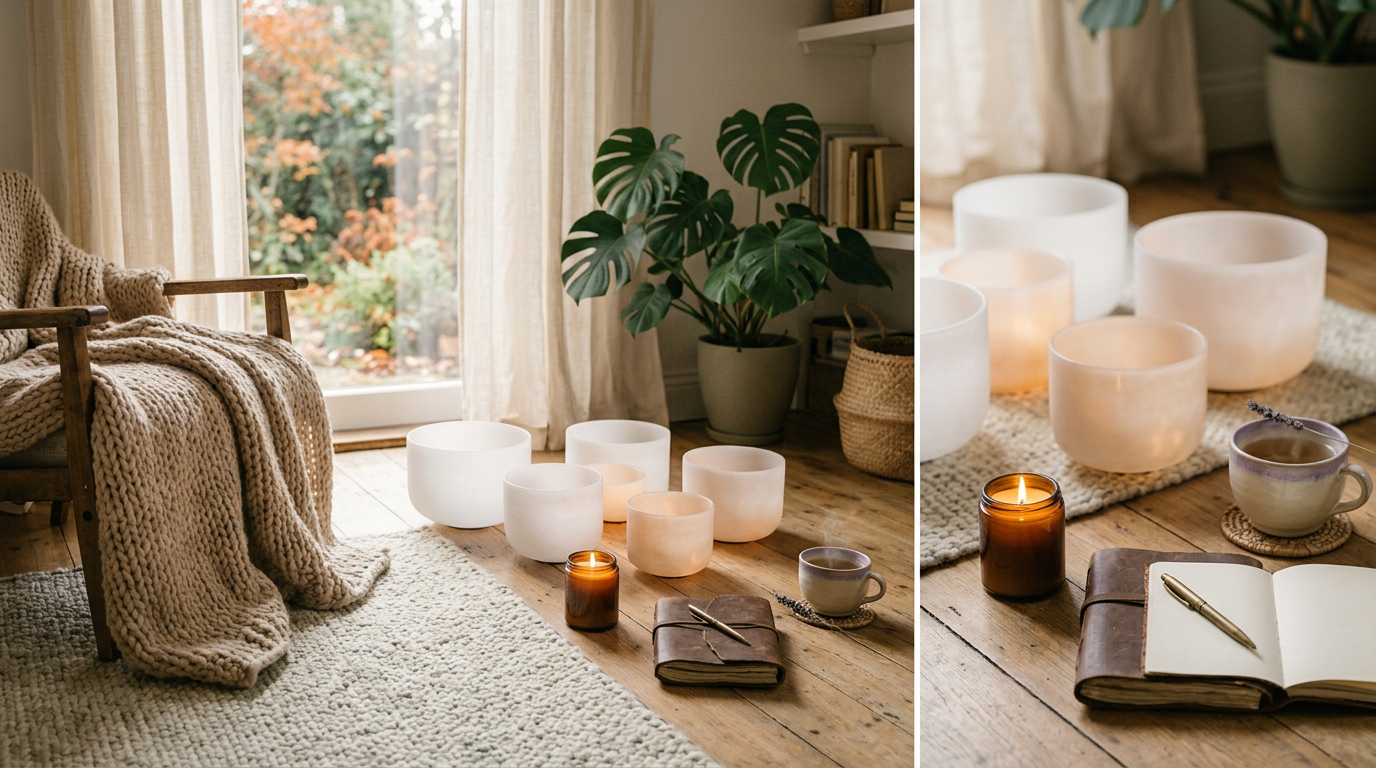
- Frosted Quartz Crystal Singing Bowl: If you are ready to invest in your first instrument, a 10-inch F-note (heart chakra) or C-note (root chakra) frosted quartz bowl is a beautiful place to start. They produce a deep, resonant tone that vibrates beautifully throughout a room.
- Koshi Chimes: These French-made wind chimes are tuned to the four elements (Earth, Water, Fire, Air). They produce an incredibly sweet, soothing, and ethereal sound that is perfect for clearing energy at the beginning or end of your meditation.
- Scented Soy Wax Candles: Light a candle infused with essential oils like amber, vanilla, or sandalwood to create a warm, flickering glow that instantly signals to your brain that it is time to relax.
- A Weighted Eye Pillow: A silk eye pillow filled with dried lavender and organic flaxseeds adds a gentle, comforting pressure over your eyes, helping to block out light and stimulate the vagus nerve for deeper relaxation.
- A Premium Linen Journal: Keeping a beautiful journal dedicated to your self-care practices allows you to document your emotional and spiritual growth over time.
You Deserve This Gentle Space to Heal
In a world that constantly demands our attention, energy, and productivity, carving out time for a sound bath meditation at home is a radical act of self-love. It is a gentle reminder that your well-being matters, and that you do not have to earn the right to rest. By allowing the comforting frequencies of sound to wash over you, you are giving your nervous system the precious opportunity to recharge, reset, and return to its natural state of balance.
As you move into the busier, colder months of the year, we encourage you to protect your peace fiercely. Start small—even just ten minutes of sound healing a week can make a profound difference in how you show up for yourself and those you love. If you are ready to begin, we invite you to set up your cozy sanctuary tonight, light your favorite candle, put on your headphones, and let the healing vibrations carry you home to yourself. You deserve this beautiful moment of peace.