Introduction
It is 7:00 PM on a Tuesday. You are exhausted after a long day of work, your energy is completely drained, and the thought of standing over a hot stove for an hour makes you want to crawl straight into bed. You open your fridge, only to find a limp carrot, half an onion, and a jar of mustard. With a sigh, you open your food delivery app and spend $30 on a mediocre takeout meal that leaves you feeling bloated and sluggish. If this scenario sounds familiar, you are not alone. Cooking healthy, balanced meals for a single household can feel incredibly discouraging and inefficient.
Most traditional meal prep resources are designed for families or couples, yielding massive six-to-eight-serving casseroles that leave singles eating the exact same leftovers for an entire week. But healthy doesn’t mean boring, and it certainly doesn’t require you to eat monotonous meals until you lose your appetite. As we head into the busy autumn and holiday season of 2026, our calendars are quickly filling up with social events, travel, and end-of-year work deadlines. Setting up a streamlined, efficient kitchen routine right now is the best gift you can give yourself to stay energized, save money, and keep your wellness goals on track.
By mastering simple meal prep for one person, you can reclaim your evenings, dramatically reduce your grocery bills, and fuel your body with nutrient-dense foods. This comprehensive guide will walk you through the psychology of single-serving prep, teach you how to cook modularly, and provide you with a step-by-step action plan to prep once and eat all week without food boredom.
The Unique Challenge of Cooking for One (and How to Overcome It)
When it comes to simple meal prep for one person, the traditional “cook one giant batch of chili and eat it for five days” approach is a recipe for failure. Within three days, food fatigue sets in, and those carefully prepped containers end up pushed to the back of the fridge, destined for the trash can. This not only wastes hard-earned money but also defeats the purpose of prepping in the first place. To succeed, we must shift our mindset from “batch cooking meals” to “modular component prep.”
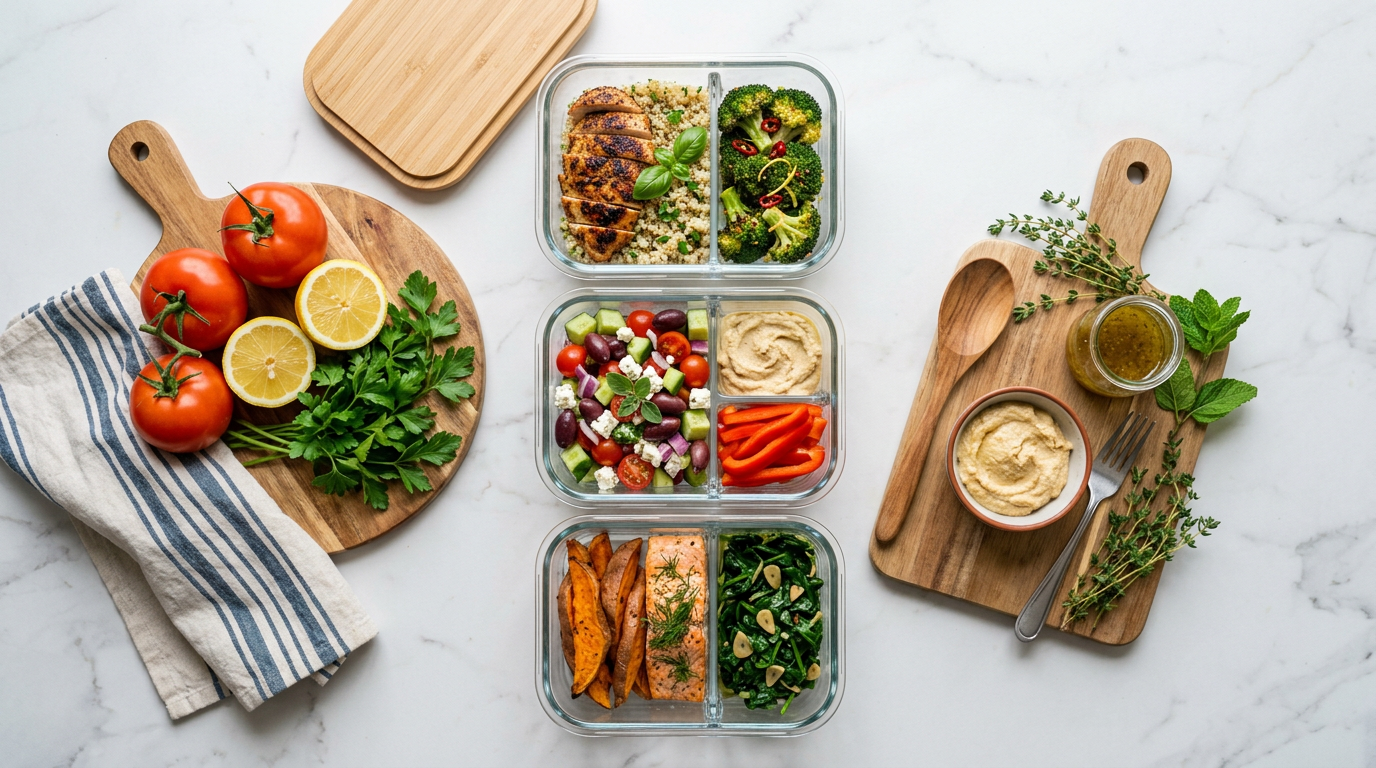
Modular component prep involves cooking versatile, individual ingredients—such as a couple of proteins, a batch of grains, and a variety of roasted vegetables—and storing them separately. This allows you to mix and match different elements throughout the week, creating entirely different flavor profiles in under five minutes. For example, grilled chicken can become a Mediterranean quinoa bowl on Monday, a spicy chicken taco on Tuesday, and a warm autumn salad on Wednesday. This strategy keeps your palate excited while keeping your kitchen time to an absolute minimum.
If you are also cooking for picky eaters in your household, or if you yourself have highly specific dietary preferences, you can easily adapt this modular method. To learn more about tailoring your ingredients to please different palates without doubling your workload, check out our guide on Clean Eating Meal Prep for Picky Eaters.
Core Principles of Single-Serving Meal Prep
1. Embrace Component Cooking
Instead of assembling full dishes, focus on preparing high-quality raw materials. Every Sunday, aim to prep two proteins (such as lean ground turkey and baked tofu), one or two complex carbohydrates (like brown rice or roasted sweet potatoes), and three different vegetables (like broccoli, bell peppers, and zucchini). Keep your seasonings relatively neutral during the initial cook. This gives you the freedom to pivot daily, using quick sauces, dressings, and spices to completely change the cuisine style on a whim.
2. Master the Art of the Freezer
Your freezer is your absolute best friend when executing an easy weekly meal prep for one. Almost any cooked protein, grain, or soup can be frozen in single-serving portions. If you make a batch of turkey chili or lentil soup, immediately portion it into individual containers and freeze half of them. This prevents you from having to eat the same meal four days in a row and builds a “freezer library” of healthy, homemade TV dinners for those nights when you truly have zero energy to cook.
3. Repurpose Leftovers Creatively
Never view leftovers as a chore; view them as a head start. If you roast a large tray of vegetables on Sunday, use them as a side dish on Monday, fold them into a quick morning frittata on Tuesday, and toss them with hot pasta and olive oil on Wednesday. By changing the vehicle (grain bowl, wrap, scramble, or pasta), you completely transform the dining experience while utilizing the exact same prepped ingredients.
4. Optimize Your Grocery Spend
Grocery shopping for one can sometimes feel more expensive per capita than shopping for a family because bulk items are cheaper but often go to waste. To combat this, plan your meals around highly versatile, budget-friendly ingredients that have a long shelf life, such as cabbage, carrots, sweet potatoes, and canned beans. If you want to optimize your grocery budget even further as we approach the major holiday sales, take a look at our Black Friday Shopping Budget Checklist to help you save money and build wealth while stocking your kitchen with high-quality staples.
3 Major Myths of Meal Prepping for One
Myth 1: You have to eat dry, boring food. Many people associate meal prep with dry chicken breasts and unseasoned broccoli. This is entirely false. Healthy food should taste incredible. The key to vibrant healthy meal prep for singles is utilizing low-calorie, high-flavor flavor enhancers like fresh lime juice, sriracha, salsa, Greek yogurt-based dressings, coconut aminos, and fresh herbs. A splash of chimichurri or a drizzle of spicy peanut sauce can instantly elevate a simple bowl of rice and chicken into a restaurant-quality meal.
Myth 2: It takes hours in the kitchen. You do not need to sacrifice your entire Sunday afternoon to meal prep. In fact, an efficient single-serving prep session should take no more than 45 minutes of active kitchen time. By utilizing multi-tasking techniques—such as roasting veggies in the oven while your grains simmer on the stove and your protein cooks in an air fryer—you can easily prep enough food for the entire workweek in less time than it takes to watch an episode of your favorite show.
Myth 3: You can’t prep fresh salads or cold lunches. Many people believe that meal prep is only for meals that need to be microwaved. This often deters busy professionals who prefer light, fresh lunches during the workday. You can easily prep crisp, refreshing meals that require absolutely no microwave time. For a complete breakdown of delicious, cold lunch ideas that stay fresh in your office bag, explore our guide on Healthy No Reheat Work Lunches.
The Ultimate 5-Step Action Plan for Single Meal Prep
Here is our foolproof, step-by-step action plan to execute simple meal prep for one person with maximum efficiency and zero stress:
- Shop Your Pantry First: Before heading to the grocery store, take a quick inventory of what you already have. Check your freezer for frozen proteins and your pantry for grains, canned beans, and spices. Build your weekly menu around these existing items to minimize cost and reduce waste.
- Write a Targeted Grocery List: Stick strictly to your list. Buy pre-chopped vegetables if you are short on time, or stick to hardy, budget-friendly vegetables like cabbage. If you need inspiration for a highly versatile, cheap, and delicious vegetable prep, try making our roasted Cabbage Steaks, which hold up beautifully in the fridge all week.
- Execute the 45-Minute Prep Sprint: Multi-task like a pro. Start by preheating your oven to 400°F (200°C). Get your grains (like quinoa or brown rice) boiling on the stove. While they simmer, chop your vegetables and toss them in olive oil, salt, and pepper. Place the veggies on one sheet pan and your seasoned protein (like chicken breast or tofu) on another. Pop both pans into the oven and set a timer for 25 minutes. While everything cooks, wash your cutting board and set out your storage containers.
- Cool Completely Before Sealing: This is a critical step that many people skip. Putting hot food directly into sealed containers creates condensation, which traps moisture and leads to soggy vegetables and spoiled proteins. Let your cooked foods cool to room temperature on the counter before snapping the lids on.
- Label and Organize: Use masking tape and a sharpie to write the preparation date on your containers. Keep three days’ worth of food in the fridge, and immediately place the remaining portions into the freezer to preserve peak freshness.
Essential Kitchen Tools for Single Meal Preppers
To make your weekly routine as seamless as possible, we highly recommend investing in a few key kitchen tools. These items will save you time, reduce cleanup, and keep your ingredients tasting fresh for days:
- Airtight Glass Containers: Glass containers are vastly superior to plastic. They do not retain odors or stains, they are completely microwave-safe, and they transition beautifully from the freezer to the oven. Look for 3-compartment glass containers on Amazon if you prefer to keep your components separated.
- A Digital Kitchen Scale: For precise portioning and tracking your macros, a simple digital kitchen scale is invaluable. It takes the guesswork out of dividing your cooked proteins and grains into equal single servings.
- Silicone Freezer Trays: Large silicone freezing molds (often sold as “Souper Cubes”) are perfect for freezing single-serving portions of stews, curries, and grains. Once frozen, you can pop the cubes out and store them in a gallon-sized freezer bag to save space.
Sample Winter-Ready Weekly Menu & Macros
To get you started, here is a highly efficient, warming autumn/winter menu designed specifically for one person. This plan prep yields 3 days of fresh fridge meals and 2 days of easy-to-reheat freezer meals.
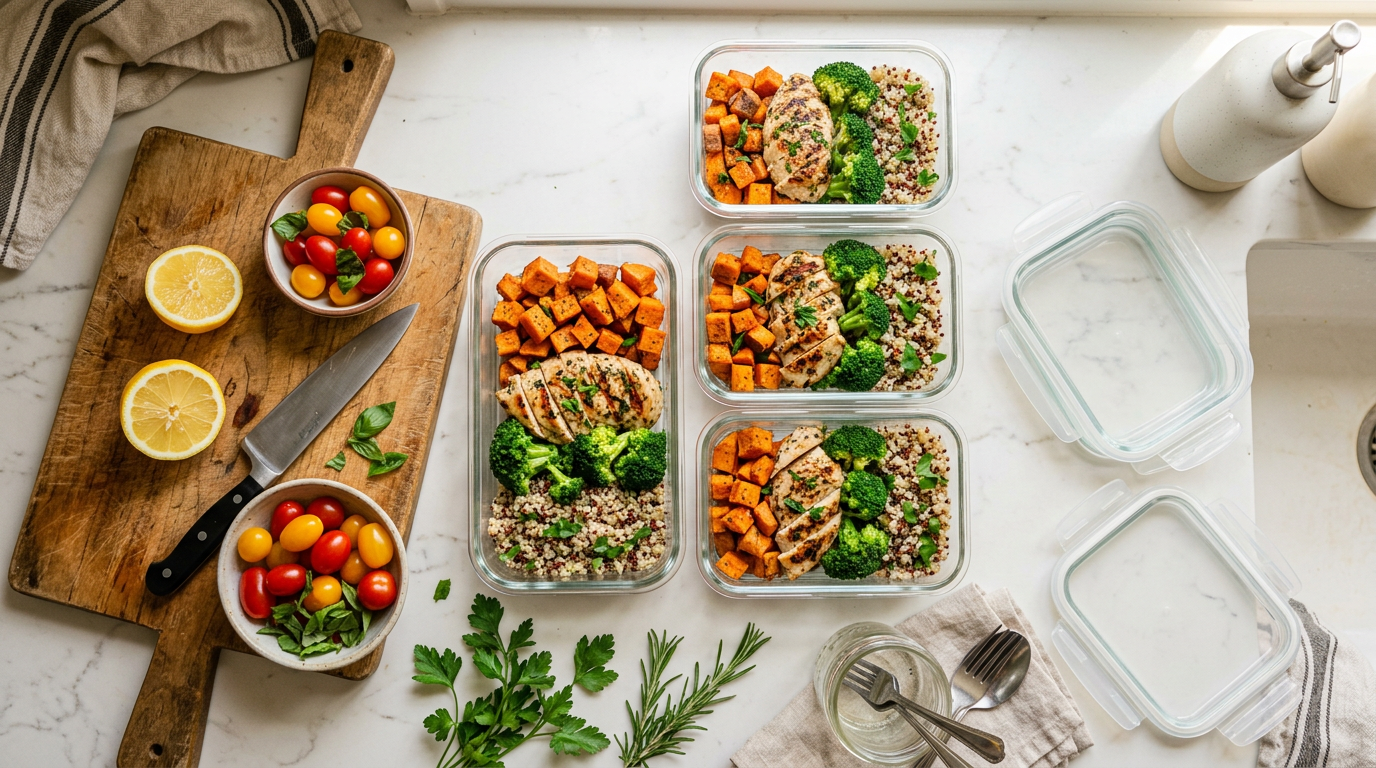
Menu Item 1: Sheet-Pan Lemon Herb Chicken & Sweet Potato (3 Servings)
Prep Time: 10 minutes | Cook Time: 25 minutes
Ingredients: 1 lb chicken breast (cubed), 2 medium sweet potatoes (diced), 3 cups broccoli florets, 1 tbsp olive oil, 1 tsp dried oregano, garlic powder, salt, pepper, and fresh lemon juice.
Storage: Store in glass containers in the fridge for up to 4 days.
Macros per serving: 380 Calories | 35g Protein | 32g Carbs | 10g Fat
Menu Item 2: Cozy Ground Turkey & Black Bean Chili (2 Servings)
Prep Time: 10 minutes | Cook Time: 20 minutes
Ingredients: 1/2 lb lean ground turkey, 1 can black beans (rinsed), 1 can diced tomatoes, 1/2 onion (chopped), 1 tbsp chili powder, cumin, and garlic.
Storage: Portion into airtight containers and freeze immediately. Reheat from frozen in the microwave for 4-5 minutes.
Macros per serving: 410 Calories | 32g Protein | 40g Carbs | 8g Fat
Conclusion
Embracing simple meal prep for one person is one of the most powerful self-care habits you can build. It completely eliminates the daily decision fatigue of “what’s for dinner,” saves you hundreds of dollars in impulsive takeout orders, and ensures that you are consistently fueling your body with high-quality, nourishing ingredients. By shifting to modular component cooking, utilizing your freezer strategically, and investing in a few durable glass containers, you can easily maintain a healthy lifestyle even with the busiest of schedules.
Remember, prep once, eat all week—healthy doesn’t mean boring! Do not wait for the perfect moment or a empty calendar to start. Pick just two recipes from this guide, carve out 45 minutes this coming Sunday, and take control of your nutrition. Your future, exhausted Tuesday-night self will thank you immensely. For more budget-friendly meal prep strategies and delicious clean-eating recipes, explore the rest of our kitchen guides today!