Introduction
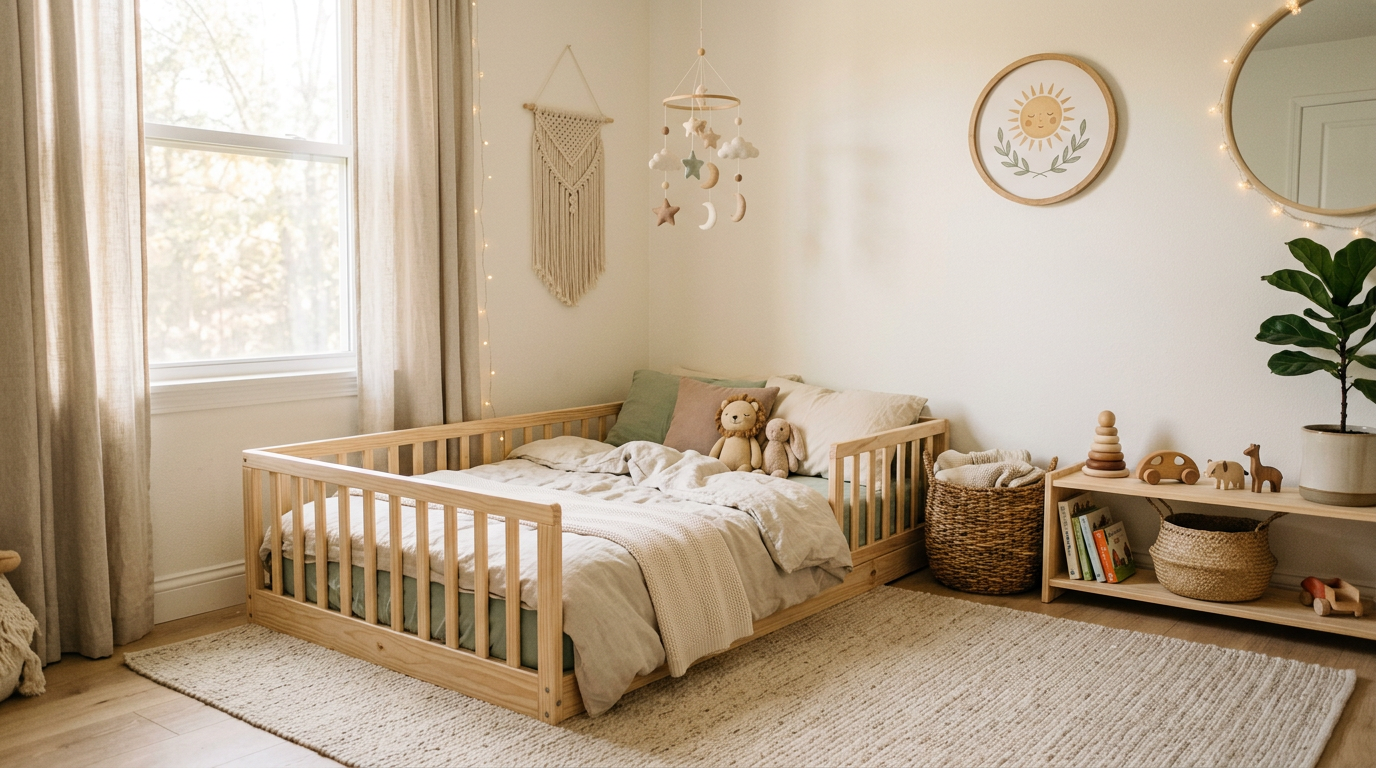
Designing a nursery is one of the most exciting milestones of preparing for a new addition to your family. As parents look for ways to foster independence, confidence, and freedom of movement from an early age, the Montessori philosophy has transitioned from the classroom into the home. At the heart of this approach is the floor bed—a simple concept that replaces the traditional crib with a low-profile mattress on or near the floor. While the idea of giving a young child free reign of their bedroom can feel daunting, planning a safe montessori baby nursery floor bed setup provides a secure, nurturing environment where your child can explore, learn, and rest on their own terms.
For expecting parents planning ahead, especially during the busy autumn and winter nesting seasons, designing this space early allows ample time to select the right materials and implement safety measures. A successful transition to a floor bed requires shifting your perspective from childproofing a crib to childproofing the entire room. In this guide, we outline the developmental benefits of this arrangement, detail critical safety guidelines, offer layout strategies for spaces of all sizes, and share parent-approved product recommendations to help you design a room that is both safe and stylish.
What is a Montessori Floor Bed and Why Choose It?
The Montessori method, developed by Dr. Maria Montessori in the early 20th century, emphasizes self-directed activity, hands-on learning, and collaborative play. When applied to the bedroom, this philosophy translates to an environment scaled to the child’s size and capabilities. Traditional cribs keep infants contained and dependent on adults to lift them in and out. In contrast, a floor bed allows a child who is developmentally ready to choose when they sleep, wake, play, and rest. This freedom of movement supports gross motor development, spatial awareness, and self-regulation.
When considering a montessori baby nursery floor bed setup, understanding the developmental timeline is essential. This setup is not designed for newborns or young infants. Pediatric safety guidelines recommend that infants under 12 months sleep in a CPSC-approved crib or bassinet in their parents' room to reduce the risk of Sudden Infant Death Syndrome (SIDS). Once your child reaches toddlerhood—typically around 12 months or older—and has developed the mobility to navigate their environment safely, transitioning to a floor bed can prevent the dangerous crib-climbing phase and ease the path toward independent sleep routines.
Beyond the developmental perks, a floor bed fits beautifully into modern design aesthetics. Whether your style leans toward neutral earth tones, a whimsical woodland theme, a clean modern minimal look, or a cozy, vintage-inspired Cottagecore Baby Room Decor Aesthetic, a low-profile bed serves as an inviting, grounded focal point. It removes the visual weight of a bulky crib, making the entire room feel more open, airy, and peaceful.
Crucial Safety Guidelines for a Floor Bed Setup
Safety is the absolute foundation of any child-centered bedroom. Because a floor bed grants your child unrestricted access to their entire room, the bedroom itself essentially becomes the crib. You must evaluate every square inch of the space through a rigorous safety lens before introducing a floor bed.
The Mattresses-and-Walls Entrapment Hazard
One of the most common and dangerous mistakes in floor bed design is pushing the mattress directly against a wall or into a corner to save space. Doing this creates a high risk of entrapment, where a child can roll into the gap between the mattress and the wall and suffocate. To prevent this hazard, standard safety guidelines dictate that a floor bed mattress must be kept entirely away from walls. Maintain a minimum gap of 12 inches (30 cm) between the mattress and any wall, radiator, or surrounding furniture. Alternatively, place the bed directly in the center of the room. The only exception to this rule is if you are using a specialized, safety-tested floor bed frame designed with built-in protective rails that leave absolutely no gaps between the frame and the mattress.
Preventing Mold and Moisture Buildup
Placing a mattress directly on the floor blocks airflow, which can trap moisture underneath and lead to mold growth—a serious respiratory health hazard for young children. To prevent this, never lay a mattress directly on carpet or hardwood for extended periods. Instead, mount the mattress on a ultra-low-profile slatted bed base or a wooden floor bed frame. This lifts the mattress just an inch or two off the ground, ensuring proper ventilation while keeping the sleeping surface low enough to prevent injury if your child rolls out of bed.
Whole-Room Childproofing
Because your toddler can leave their bed at any point during the night or naptime, the entire room must be completely childproofed. Follow this safety checklist to secure the space:
- Anchor All Furniture: Heavy furniture like dressers, bookshelves, and changing tables must be securely anchored to the wall studs using heavy-duty anti-tip straps.
- Secure Electrical Outlets and Cords: Use outlet wall covers that completely enclose plugs. Ensure all cords for baby monitors, white noise machines, and lamps are encased in solid wall covers or kept entirely out of reach.
- Window Safety: Install cordless window treatments. If you use blackout curtains, ensure the cords are completely inaccessible and the curtains are securely anchored to the wall to prevent them from being pulled down. Keep the bed far away from windows.
- Door Safety: Install a secure, extra-tall baby gate at the nursery doorway or keep the door closed with a childproof handle lock to prevent unsupervised wandering into bathrooms, kitchens, or stairways at night.
- Remove Small Choking Hazards: Regularly inspect the floor for small toys, coins, or debris. Keep toys in the room limited to soft, age-appropriate items.
Designing the Layout: Small Spaces and Aesthetic Trends
Integrating a montessori baby nursery floor bed setup into a small room requires thoughtful planning, but it is highly achievable. In a compact space, a twin-sized or crib-sized mattress works best, as it preserves valuable floor space for play and movement.
Maximizing Small Spaces
To make a small room feel larger, prioritize multi-functional furniture and vertical storage that sits out of your child's reach. Choose a low, open toy shelf where only a few curated toys are rotated weekly; this prevents sensory overload and keeps the room tidy. Keep the center of the room as open as possible to serve as a dedicated play mat area. Using light, neutral earth tones on the walls—such as warm beige, soft terracotta, or muted sage—can also make a small space feel bright and expansive.
Embracing Design Trends
Your nursery can be both highly functional and visually stunning. Here are a few ways to align your floor bed setup with popular design aesthetics:
- Modern Minimal: Pair a simple, light oak slatted floor frame with crisp white organic cotton bedding. Keep decor sparse and intentional, focusing on clean lines and natural light.
- Boho & Earth Tones: Use a rattan or natural wood frame. Incorporate warm, earthy textiles, a soft washable cotton rug, and a simple rainbow wall hanging to add warmth and texture.
- Woodland & Cottagecore: Frame the bed with a house-shaped wooden canopy. Decorate with botanical prints, soft forest-green accents, and whimsical stuffed forest animals to create a cozy, nature-inspired retreat.
Step-by-Step Guide to Assembling Your Floor Bed
Ready to build your setup? Follow this step-by-step action plan to ensure a smooth, safe installation:
- Assess Readiness: Confirm your child is at least 12 months old and has the motor skills to climb on and off a low surface safely.
- Prepare the Room: Empty the room of any unnecessary furniture. Vacuum thoroughly, clean the baseboards, and install anti-tip furniture anchors and outlet covers.
- Select the Base: Purchase a low-profile slatted frame. Ensure the wood is unfinished or coated in a non-toxic, zero-VOC sealant.
- Choose the Mattress: Opt for a firm, breathable mattress. A mattress that is too soft poses a suffocation risk if a child rolls over onto their stomach. Look for Greenguard Gold certification to ensure low chemical emissions.
- Position the Bed: Place the bed frame in your chosen spot, ensuring it is at least 12 inches away from all walls and furniture. Avoid placing it near windows, heaters, or electrical outlets.
- Add Safe Bedding: Use a tight-fitting organic cotton fitted sheet. Avoid using heavy blankets, pillows, or stuffed animals in the bed for younger toddlers; a wearable blanket or sleep sack is a safer alternative for keeping warm during cooler months.
- Install a Video Monitor: Mount a high-quality video monitor on the wall where you have a clear view of the entire room, not just the bed. This allows you to monitor your child's movements safely from another room.
Registry Must-Haves vs. Nice-to-Haves
When curating your baby registry, it is easy to get overwhelmed by the sheer volume of gear available. To help you budget and plan, we have categorized the essential items you need for a safe and stylish floor bed setup, along with average price ranges.
Registry Must-Haves (Prioritize These)
- Slatted Wooden Floor Bed Frame ($120 – $350): Lifts the mattress off the floor for ventilation while keeping it low to the ground.
- Greenguard Gold Certified Firm Mattress ($150 – $300): Provides safe, non-toxic, firm support.
- Heavy-Duty Furniture Anchors ($10 – $25): Essential for securing dressers and bookshelves to wall studs.
- Cordless Blackout Curtains ($30 – $80): Crucial for maintaining sleep hygiene and eliminating dangerous dangling cords.
- High-Quality Video Baby Monitor ($100 – $250): Allows you to keep a watchful eye on the entire childproofed room.
Nice-to-Haves (Great for Gifting)
- Low-Profile Open Toy Shelf ($60 – $150): Perfect for displaying a small, rotated selection of toys at your child's eye level.
- Washable Cotton Play Rug ($80 – $200): Provides a soft spot for playtime next to the bed and is easy to clean in the washing machine.
- Dimmable Nightlight ($20 – $40): Helps you navigate the room for nighttime check-ins without waking your child with harsh overhead light.
Conclusion
Transitioning to a montessori baby nursery floor bed setup is a wonderful way to encourage independence, confidence, and a healthy relationship with sleep from an early age. By shifting the focus from containing your child to creating a completely safe, childproofed environment, you give them the freedom to explore their world at their own pace. Remember to prioritize safety above all else: wait until your baby is at least 12 months old, keep the mattress a safe distance away from all walls, and anchor every piece of furniture securely.
With a thoughtful layout, high-quality materials, and a touch of personal style, you can create a cozy, functional space where your child will love to sleep and play. If you are currently designing your dream nursery, start your planning early to ensure a stress-free transition. Explore our other nursery design resources to find the perfect aesthetic inspiration for your home today!